
Artwork Help & Print Tips, Branding & Marketing
Business Card Finishes Explained: Matt, Gloss, Soft Touch & More
First impressions matter and your Business Card is often the first physical thing someone associates with your brand. The design gets them interested. The finish makes them remember it.
Business Card finishes are the coatings and treatments that go onto your printed cards once they come off the press. They serve two purposes: protecting your card from everyday wear, moisture and fingerprints and creating visual and tactile effects that communicate something about who you are and what you do.
Getting the finish right doesn’t have to be complicated. This guide covers everything you need to know, from lamination types and corner styles to special finishes like foiling, Spot UV and embossing, so you can make a confident choice.
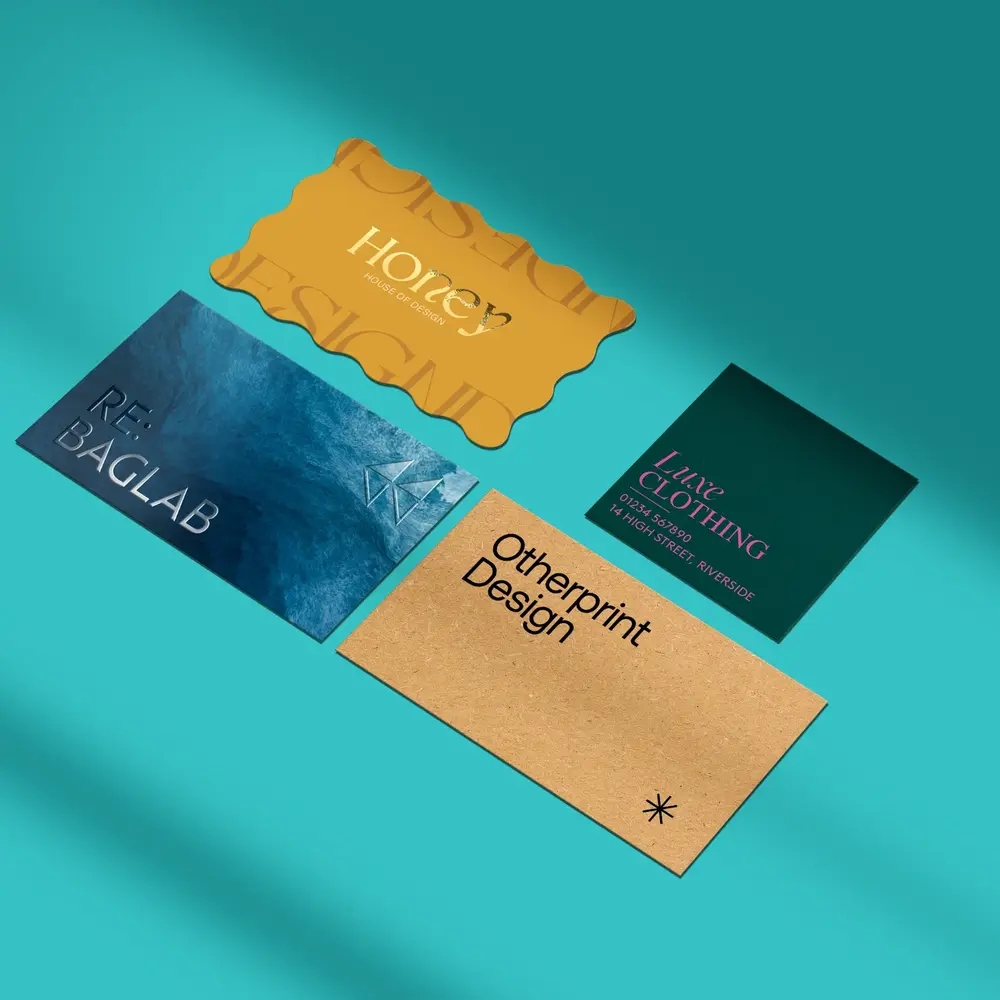
Table of contents
- What are business card finishes?
- Types of business card print finishes
- Lamination sides: what you need to know
- Matt vs. glossy business cards
- Special finish options for business cards
- How to choose the right finish for your business cards
- Other frequently asked questions
What are Business Card finishes?
Business Card finishes fall into a few key categories: lamination, corner styles and special finishes.
Lamination is the most common. It seals the printed surface with a thin protective film, and there are several types to choose from:
- Matt lamination gives you a soft, non-reflective surface that resists fingerprints and keeps text easy to read
- Gloss lamination delivers a high-shine coating that makes colours pop, brilliant for bold graphics and photography
- Velvet lamination (also known as soft touch) offers a velvety, tactile texture that gives your cards a premium feel
- Anti-bacterial gloss lamination works just like standard gloss but with silver ions built in to prevent 99% of bacteria from surviving on the surface
Lamination can be applied to one side, both sides, or not at all. Each option has its own advantages, which we’ll cover shortly.
Corner style is another choice worth considering. Square corners have a classic, traditional feel. Round corners feature a 5mm curve for something more contemporary.
Then there are the special finishes including foiling, Spot UV, embossing, debossing and die cutting. These go beyond protection and into real brand impact. More on those further down.
Types of Business Card print finishes
Matt Lamination
Matt lamination gives your card a soft, subtle surface. It’s completely non-reflective, which cuts out glare, great for text-heavy designs that need to stay readable in any lighting. It also guards against fingerprints, smudges and everyday handling wear. If your design has heavy ink coverage, matt lamination handles that beautifully too.
Gloss Lamination
Gloss lamination is all about impact. The high-shine coating makes colours pop and images come to life. If your card features bold graphics or photography, gloss is a brilliant choice. It also protects against moisture and scratches, keeping your cards looking sharp long after they’ve been handed out.
Velvet Lamination
Velvet lamination, also known as soft touch lamination, is a real crowd-pleaser. The velvety, touchable texture feels as good as it looks and the completely non-reflective surface gives it an understated, premium quality. It’s the kind of finish people notice the moment they pick your card up.
Anti-Bacterial Gloss Lamination
Anti-bacterial gloss lamination does everything standard gloss does, and then some. Silver ions are built directly into the coating, preventing 99% of bacteria from surviving on the card surface. You get all the visual punch of a gloss finish, with the added reassurance of enhanced hygiene, a smart choice for healthcare professionals or anyone in client-facing roles.
Round Corners
You can add round corners (5mm radius) to most card sizes for a softer, more contemporary look. The best part? You’re in control. Choose to round all four corners for a consistently smooth finish, or select just one or two to create something more unique.
It’s a small change that makes a noticeable difference. The 5mm curve replaces standard square edges, giving your card a modern, polished feel, and rounded corners are less prone to damage from everyday handling and storage. Just keep in mind that if your design has content close to the edges, you’ll need to adjust it to account for the curve.
Prefer something more traditional? Square corners are always an option too.
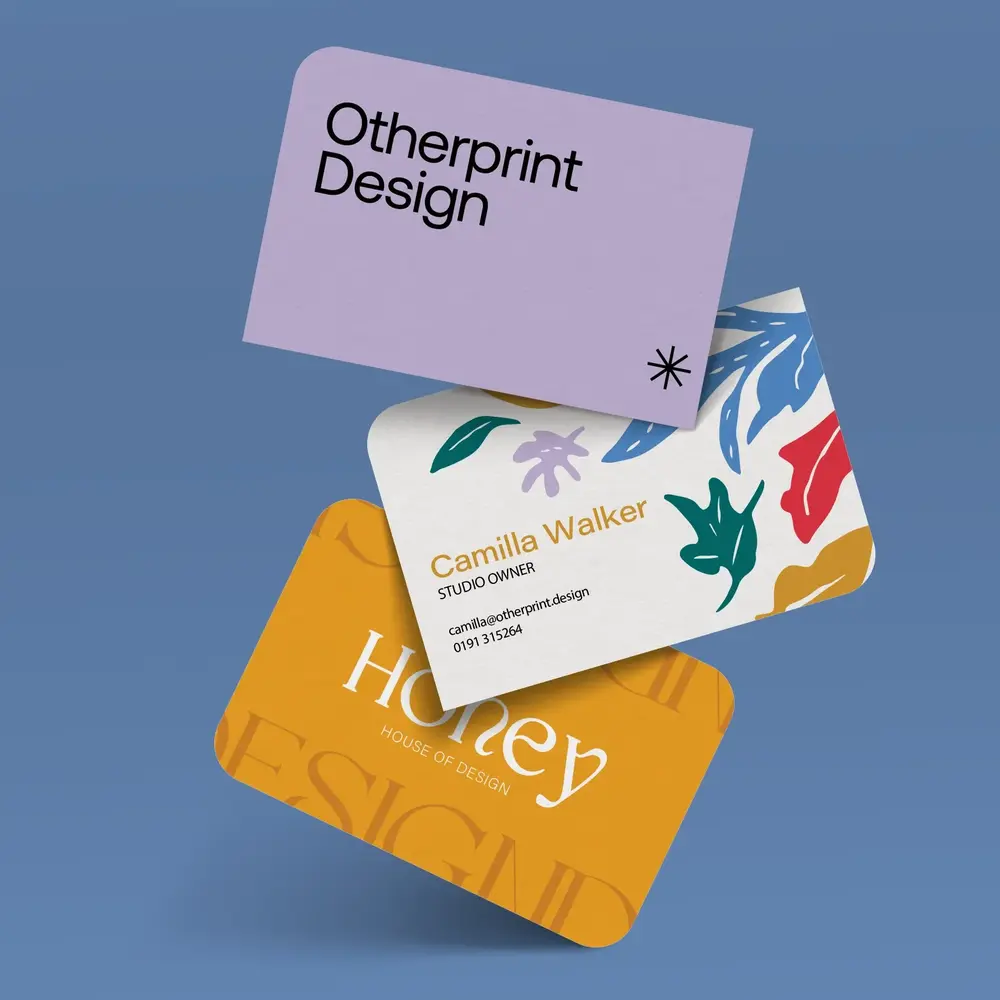
To add lamination or rounded corners to your Business Card order, simply select these options within the product wizard, simple as that!
Lamination sides: what you need to know
Not all lamination has to cover every inch of your card. There are three ways to apply it and each works a little differently.
No Lamination
Without lamination, your card keeps the natural feel of the paper stock. It’s the most writable option for standard ballpoint pens, pencils and most writing instruments work perfectly on an uncoated surface. That makes it a great choice if you want recipients to jot notes directly on the card. Just bear in mind that uncoated cards are a little more vulnerable to moisture, fingerprints and everyday handling.
One Side Lamination
Want the best of both worlds? One sided lamination protects one face of your card while keeping the other writable. The lamination defaults to page one of your submitted PDF, if you’d like it applied to the reverse, simply swap the page order before sending your file. The laminated side stays protected from smudging and moisture, while the back keeps its original paper texture and remains easy to write on.
Both Sides Lamination
Both sided lamination is our most popular option and it’s easy to see why. It wraps your entire card in a protective coating, front and back, giving you maximum resistance to fingerprints, moisture and surface scratches. It’s especially worth choosing if your design has heavy ink coverage, as the coating keeps dense colour applications from chipping or smearing. One thing to note: standard ballpoint ink won’t always adhere to a fully laminated surface, so this isn’t the one to pick if you need people to write on your cards.
Matt vs. glossy Business Cards
Not sure which finish is right for you? Here’s how the two compare.
Both matt and gloss lamination protect your card but they create very different impressions, visually and physically.
Matt lamination keeps things subtle. The non-reflective surface cuts out glare, so your text stays easy to read in any lighting. It’s smooth to the touch with just enough texture to feel considered and premium. It also does a great job of resisting fingerprints, so your cards stay looking fresh through repeated handling. If your design is text-heavy or your brand has a more understated professional feel, matt is a brilliant choice.
Gloss lamination is bold and bright. The high-shine surface makes colours pop, especially in photographs, logos and solid colour blocks. It catches the light in a way that creates real visual impact. If you’re a photographer, designer or someone who wants their card to turn heads, gloss could be the one for you. Just bear in mind that glossy cards do show fingerprints more easily, so they may need a little more care.
There’s a tactile difference too. Matt cards feel smooth but grippy, easy to handle and hold. Gloss cards feel slick and polished, with a high-end feel that’s hard to replicate.
On colour, matt tends to reproduce shades accurately, close to what you’d see on screen. Gloss shifts colours towards higher saturation, making them feel richer and more vivid.
There’s no wrong answer here. It really comes down to your brand, your design, and the impression you want to leave.
Special finish options for Business Cards
Want your Business Cards to really stand out? Special finishes go beyond lamination, adding metallic accents, raised textures and custom shapes that make a lasting impression.
Debossed or Embossed Business Cards
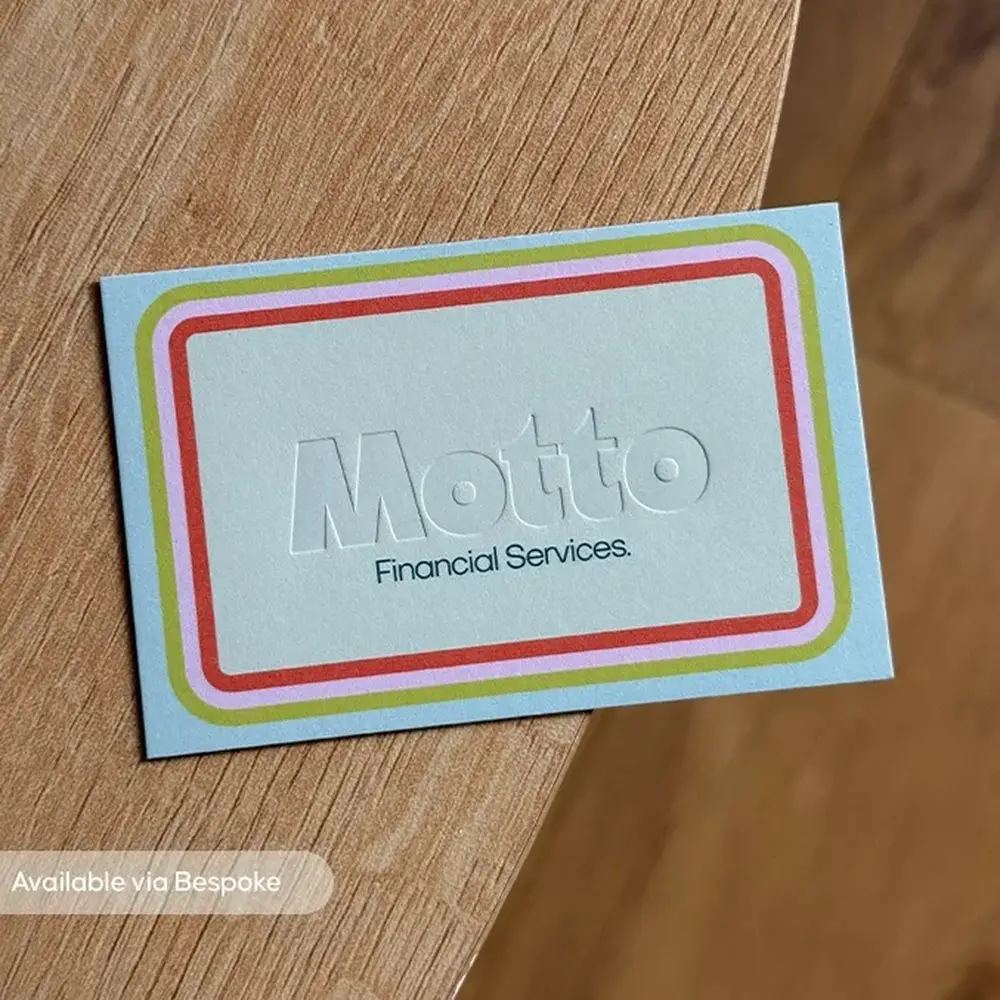
Embossing physically raises elements from the card surface, text, logos, decorative details. It’s done using metal dies that press into the card stock, creating a three-dimensional effect you can both see and feel. Debossing works the other way, pressing designs into the surface to create a recessed impression. Both add a real sense of craftsmanship and quality that’s immediately apparent.
Spot UV Business Cards
Spot UV adds a raised, glossy coating to specific areas of your card. Think logos, names, or graphic patterns, anything you want to highlight. It works best over a matt laminate, where the contrast between the shiny UV areas and the soft background really pops. The result is a finish that’s as tactile as it is eye-catching.
Foil Business Cards
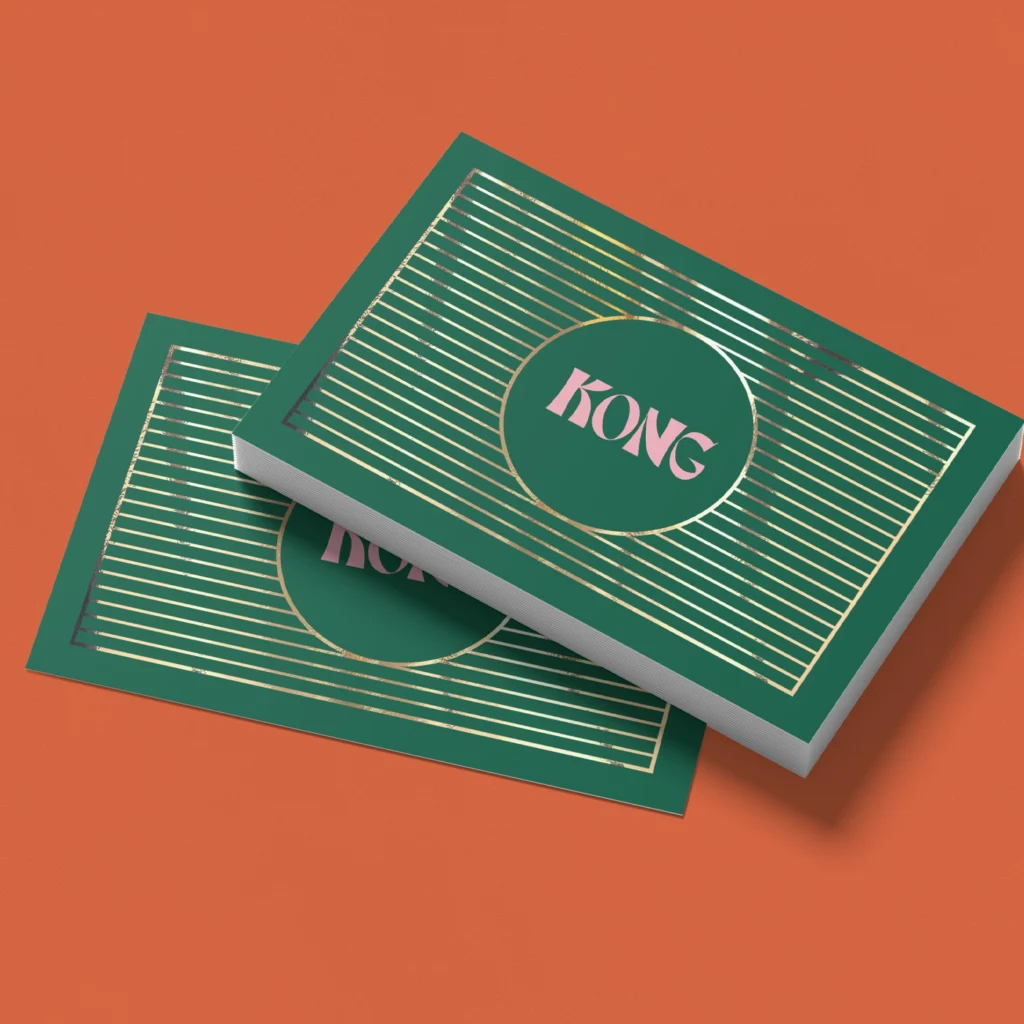
Foiling bonds a thin metallic film to specific areas of your card using heat and pressure. Gold, silver, copper, there’s a range of colours to choose from. The finish catches light beautifully, shifting in appearance depending on the angle. It’s a great way to add a premium, reflective accent that standard ink simply can’t replicate.
Die Cut and Custom Shapes
Who says Business Cards have to be rectangular? Die cutting lets you create cards in virtually any shape, following a logo outline, adding cut-out windows or going for something completely unique. Just keep in mind that custom shapes need careful design planning to ensure your card still fits comfortably in wallets and cardholders.
Learn more about all available special finishes on our Special Finishes Hub to find the right fit for your project.
How to choose the right finish for your Business Cards
The right finish comes down to a few key things.
Start with your ink coverage. Got a bold design with solid colour backgrounds or full-bleed imagery? Lamination is your friend, it protects heavy ink applications from chipping and smearing during handling.
Think about how your cards will be used. Need recipients to jot notes on the back? Go for no lamination or one side lamination, as standard ballpoint pens don’t adhere well to laminated surfaces. If your cards are purely for sharing information, both sides lamination gives you the most protection.
Let your design lead the way.
- Photography or bold graphics? Gloss lamination brings colours to life
- Text-heavy layout? Matt keeps things clear and glare-free
- Want to make a tactile impression? Velvet lamination is hard to forget
Consider your industry. Corporate and professional settings tend to suit matt finishes, understated and clean. Creative industries can afford to go bolder with gloss or special finish. Corner treatments work the same way: round corners feel modern, square corners feel traditional.
Factor in your budget. Standard lamination is a cost-effective way to protect your cards. Foiling, Spot UV, embossing and die cutting add a premium touch but they do come at a higher price. Worth it for the right brief.
Not sure which finish is right for you? We’d always recommend ordering a sample pack first. There’s nothing quite like seeing, and feeling, the options in real life before you commit.
Other frequently asked questions
What are the main types of lamination finishes available for Business Cards?
The primary lamination finishes include matt (non-reflective with a soft surface), gloss (high-shine coating that intensifies colours), velvet (velvety texture with a premium feel), and anti-bacterial gloss (glossy finish with silver ions that prevent 99% of bacteria). Each finish offers different visual and tactile qualities to suit various design needs and professional contexts.
Should I choose matt or glossy lamination for my Business Cards?
Matt lamination is ideal for text-heavy designs and professional contexts where clear readability without glare matters most. Gloss lamination works best for cards featuring photography, bold graphics, or designs where vibrant colour impact is the priority. Matt finishes resist fingerprints better and convey understated professionalism, whereas gloss finishes amplify colour saturation and create immediate visual impact.
Can I write on laminated Business Cards?
Unlaminated cards allow easy writing with standard pens and pencils. One side lamination leaves one surface writable while protecting the other. Both sides lamination prevents writing with certain pen types, as standard ballpoint ink may not adhere properly to a fully sealed surface. If you need recipients to write notes on your cards, choose no lamination or one-sided lamination.
What special finish options can make Business Cards stand out?
Special finishes include Spot UV (raised glossy areas over matt surfaces), embossing and debossing (raised or recessed dimensional effects), foiling (metallic film accents in gold, silver or copper), and die cutting (custom shapes beyond standard rectangles). These techniques add dimensional, metallic or structural elements that create distinctive visual and tactile effects.
What’s the difference between round and square corners on Business Cards?
Round corners feature a 5mm radius curve that creates a more contemporary look and helps prevent corner damage from handling. Square corners maintain traditional rectangular edges for a conventional, professional appearance. When selecting round corners, ensure design elements are positioned at least 5mm from the edges to avoid being clipped by the rounding process.

About the author
Meet Drew! As part of the Printed.com marketing team, Drew spends her days crafting content. When she’s not working her magic on marketing, you’ll find her enjoying quality time with her daughter and her furry friend, Archie.

