
Print Inspiration
Ultimate Guide to Paper Sizes: From Half Letter to Tabloid
We know that size matters. That’s why our guide to paper sizes is here to help.
The first step to printing your designs is understanding what space you’ve got to work with, and we don’t want confusing print terminology to hold you back! Let’s dive in and compare some of our popular paper sizes…
Table of contents
Overview of paper sizes
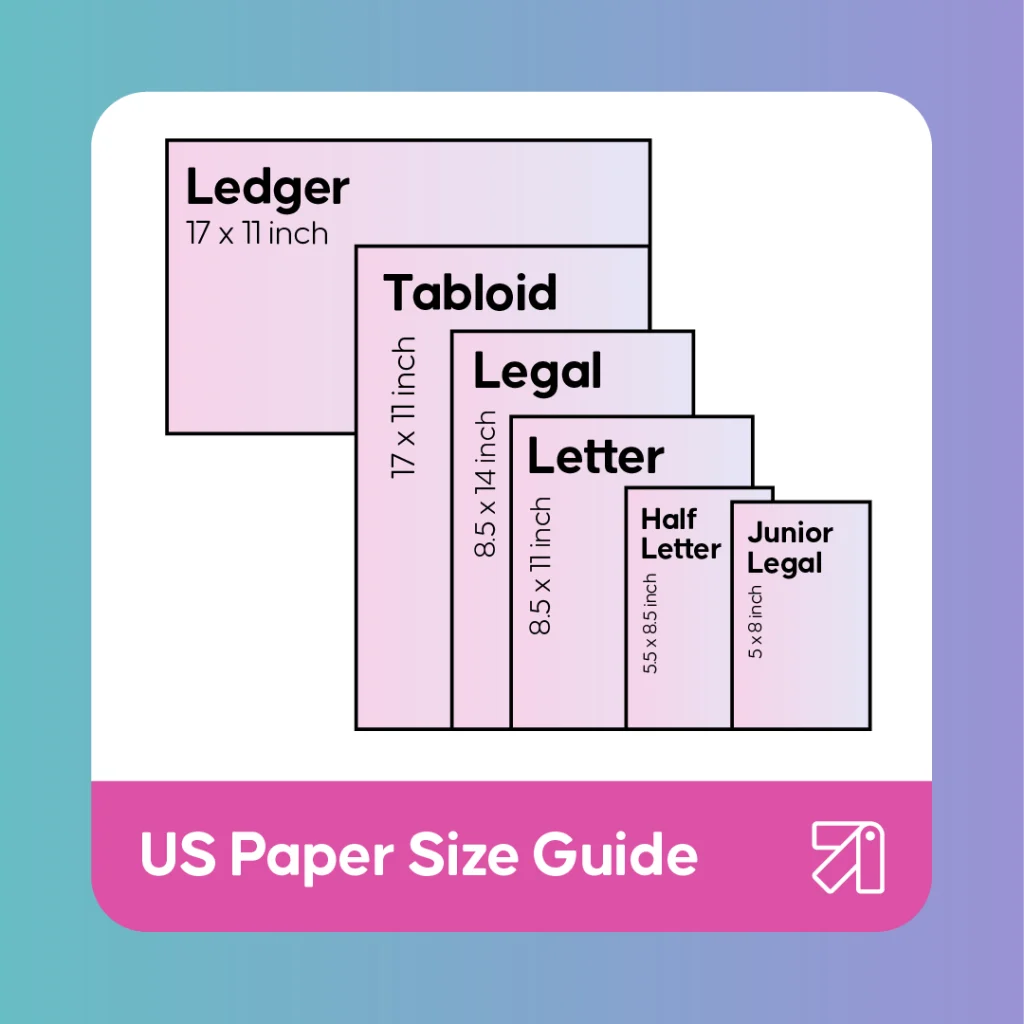
Understanding paper sizes will help you choose the perfect fit for your project, whether it’s for business stationery, marketing materials, or large-format displays.
Letter: The most common and widely recognised paper size in the United States. Letter paper size is your go-to for standard documents, Letterheads, reports, and home printing.
Half Letter: As the name suggests, this is a Letter-sized sheet cut in half. It’s a great, portable size for items like Flyers, Invitations, notepads, and personal organisers.
Legal: A little longer than Letter size, Legal paper size is traditionally used for contracts and, you guessed it, legal documents. Its extra length provides more space for text-heavy pages.
Junior Legal: This compact size is often used for smaller notepads and memo pads, making it a handy option for quick notes.
Tabloid: Double the size of a Letter sheet, Tabloid paper size is great for making an impact. You’ll often see it used for newsletters, small posters, Menus, and presentations that need a bit more room.
Ledger: This is the same size as Tabloid but used in a landscape (horizontal) orientation. It’s perfect for spreadsheets, architectural drawings, and large financial reports.
Comparison of paper sizes
| Paper Size | Width x Height (in inches) | Width x Height (in mm) | Width x Height (in cm) |
| Letter | 8.5 x 11 | 216 x 279 | 21.6 x 27.9 |
| Half Letter | 5.5 x 8.5 | 140 x 216 | 14 x 21.6 |
| Legal | 8.5 x 14 | 216 x 356 | 21.6 x 35.6 |
| Junior Legal | 5 x 8 | 127 x 203 | 12.7 x 20.3 |
| Tabloid | 11 x 17 | 279 x 432 | 27.9 x 43.2 |
| Ledger | 17 x 11 | 432 x 279 | 43.2 x 27.9 |
At Printed.com, the closest alternative to Junior Legal that we offer is 5 x 7”. If you have any questions or queries please don’t hesitate to contact our customer service team – theteamus@printed.com.
Understanding paper weights
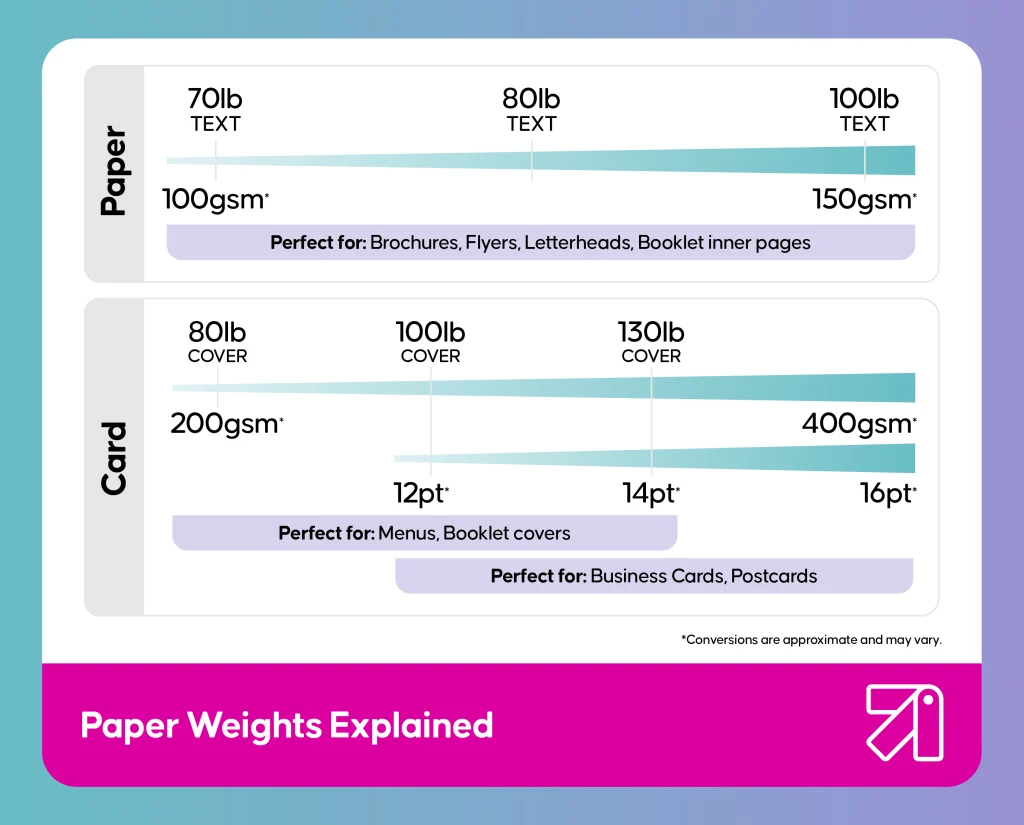
Paper weights are measured in pounds (lbs), based on the weight of 500 sheets of a paper’s uncut base size, which varies by paper type. These types include bond, text, book, cover, index, and tag. The system can be a bit confusing since the same weight can have different thicknesses. Paper weights are often converted to the metric system using GSM (grams per square meter), which is a universal standard.
Here are some of the most popular paper weights, their GSM equivalents, and common uses:
| Paper Weight | GSM | Common Uses |
| 130lb cover | 350-352 | Business Cards, Invitations |
| 100lb cover | 270 | Flyers, Business Cards, Invitations |
| 100lb text | 150 | Flyers and Brochures |
| 80lb cover | 215-217 | Business Cards, Invitations, Flyers |
| 80lb text | 118-120 | Booklets and Catalogs |
| 70lb text | 105 | Flyers and Brochures |
| 16pt | 350 | Business Cards, Greeting Cards |
| 14pt | 300 | Business Cards, Greeting Cards |
| 12pt | 250-260 | Business Cards, Invitations, Greeting Cards |
Different printing projects require different paper weights. If you’re printing a Brochure that needs to feel sturdy, you’ll want to use a paper with a higher GSM. Meanwhile, if you’re printing a large batch of Flyers, a thinner paper with a lower GSM may be more cost-effective.
Help finding the right paper size for your project
At Printed.com, we are here to help you find the right paper for your project. Visit our Help & Support Center to find answers to Frequently Asked Questions, or drop us an email at theteamus@printed.com for further guidance. For more information about our paper types, check out our helpful guide:

About the author
Our in-house Design Team Leader, Becca, has a love of all things creative. When she’s not designing, you can find her checking out independent coffee shops or getting her hands dirty with her house renovation.
